Challengers Libvpx - |work|
Edit, transform and enhance photos with text prompt
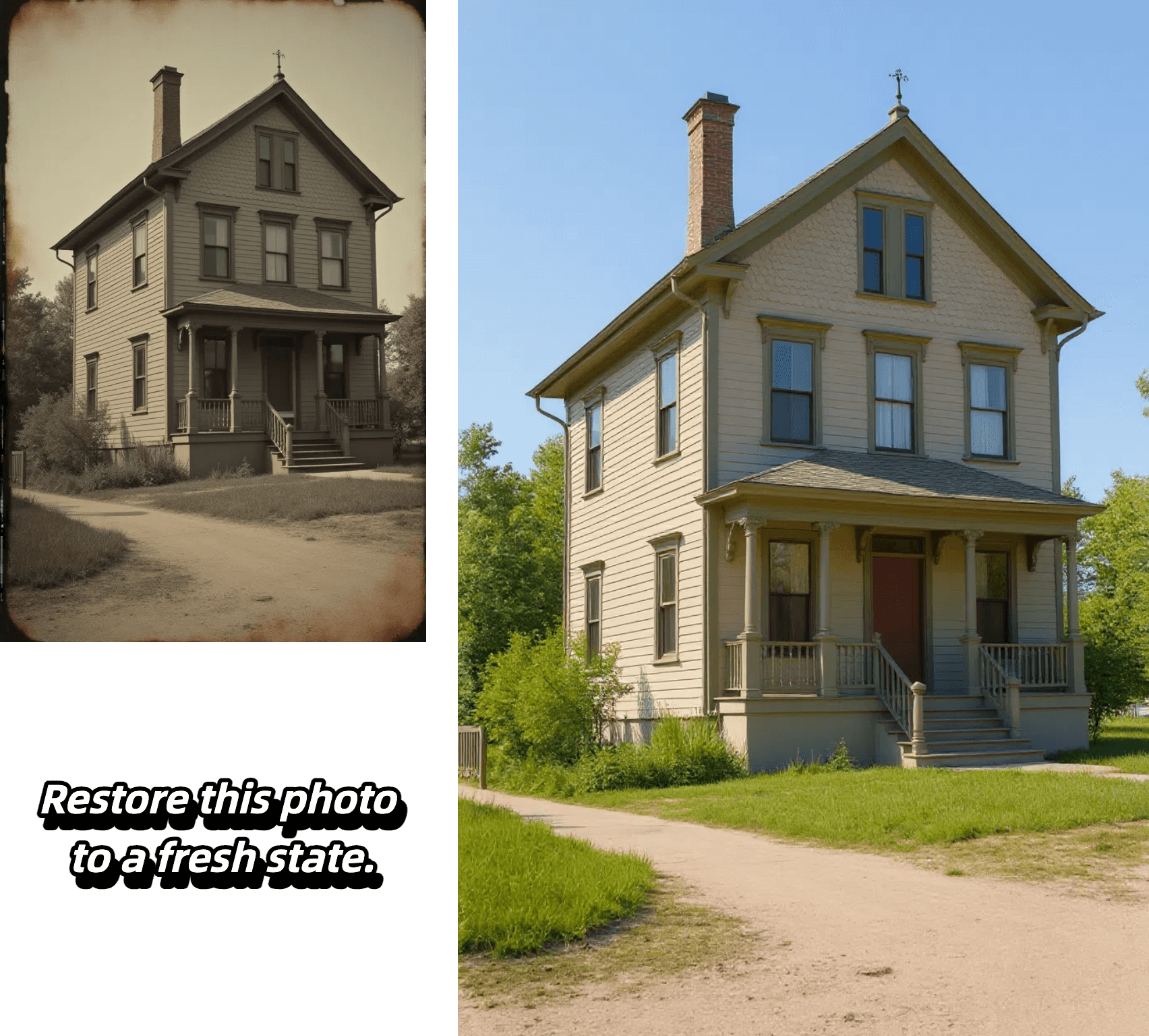

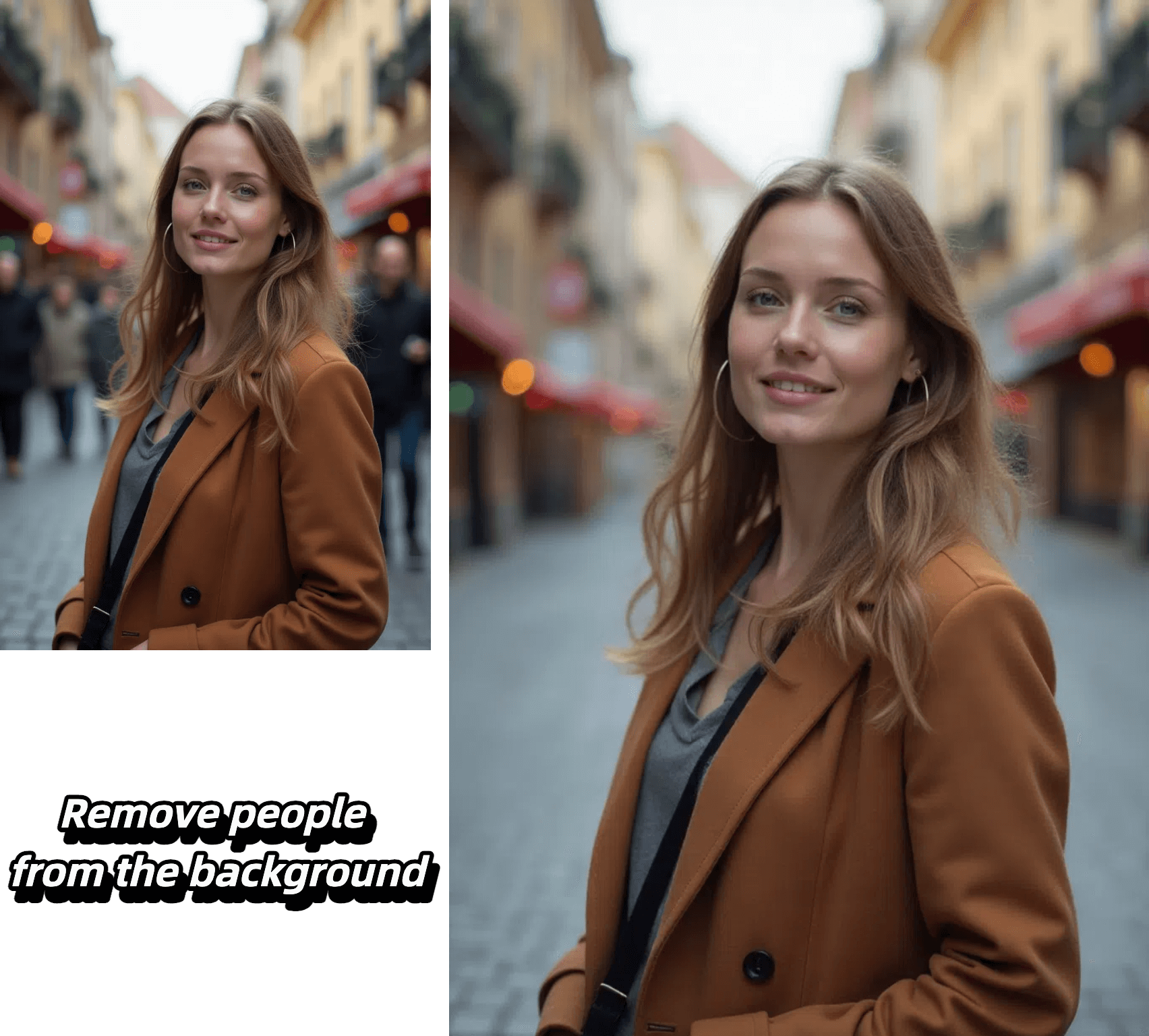
Edit, transform and enhance photos with text prompt

Alter poses, outfits, or backgrounds while our AI keeps your character's face, proportions, and style perfectly consistent from frame to frame.

Select any region—eyes, sky, or logo—and refine it with pixel-level accuracy. Our model isolates the area and applies exactly the adjustment you specify, leaving the rest untouched.

Insert crisp, naturally integrated text into photos in seconds—perfect for captions, call-outs, or branding—without tedious masking or layering.

Upload a reference image, choose a style, and let the AI recreate your photo with matching colors, textures, and mood while preserving key composition details.
Experience effortless image editing with our AI-powered process:

Select the AI model that best suits your editing needs. Each model is optimized for different types of transformations.
Start by uploading your image. We support JPEG, PNG, GIF, or WEBP formats up to 20MB and 4096 x 4096 pixels. For best results, use clear, high-quality images.
Tell our AI exactly what changes you want to make. Be specific about your desired edits - from changing backgrounds to adjusting styles and effects.
Generate multiple variations of your edited image, review the results, and select your favorite outputs. Download your transformed images in high quality.
Discover the advantages that make our platform the smart choice for AI-powered image editing:
Our AI precisely maintains character features, facial details, and core elements while applying transformations. Whether editing backgrounds, poses, or styles, your subject's key characteristics remain perfectly consistent.
Target specific areas with pixel-level accuracy - from eyes to backgrounds to logos. Our AI isolates and modifies exactly what you specify while intelligently preserving surrounding elements.
From seamless text integration to style transfers, our platform offers comprehensive editing capabilities. Transform images with reference-based styling, add natural-looking text, and modify everything from colors to lighting with precise control.
Generate multiple high-quality variations in seconds, perfect for rapid prototyping and commercial projects. Create content ready for marketing, branding, social media, and more without complex editing software.
If you tell me your specific angle (e.g., “I need a challenger for real-time streaming” or “I want to show libvpx is outdated”), I can narrow it down to .
Here’s a structured list of strong academic and technical papers that either directly critique, compare, or position themselves as challengers to (Google’s VP8/VP9 encoder). challengers libvpx
These papers focus on — key battlegrounds where alternatives challenge libvpx. 1. Most Direct “Challenger” Paper Title: AV1 vs. VP9: A Performance and Compression Comparison for Modern Video Coding Why: Directly benchmarks libvpx (VP9) against libaom-AV1 (the intended successor, but also a challenger in terms of compression efficiency). Shows where libvpx still wins on speed vs. AV1’s better bitrate. Findings: libvpx remains faster but is outperformed in compression by 20–30% by AV1 at similar perceptual quality. Venue: IEEE ICIP or MMSys (multiple versions exist). 2. Real-Time Challenger: x264/x265 Comparison Title: A Comparative Study of H.264, H.265, and VP9 Encoders: x264, x265, and libvpx Performance Evaluation Why: Shows x264 and x265 as strong challengers to libvpx in live encoding scenarios. Often beats libvpx in speed-quality trade-off. Key insight: x264 is still faster than libvpx for real-time, x265 catches up in compression at slower presets. Source: ACM MMSys 2021 (Grois et al.) or IEEE Transactions on Circuits and Systems for Video Technology . 3. Challenger Focused on Hardware/Energy Title: Energy-Efficient Video Encoding on Mobile Devices: A Comparison of libvpx (VP9), MediaCodec (H.264), and Hardware Encoders Why: Positions hardware encoders and lightweight codecs as challengers to libvpx in mobile/embedded contexts. Libvpx often loses in power-per-frame. Example: IEEE INFOCOM Workshop on Mobile Video 2019. 4. Challenger from New Codec: SVT-VP9 vs. libvpx Title: Scalable Video Technology for VP9 (SVT-VP9): A Challenger to libvpx in Multi-core Encoding Why: Intel’s SVT-VP9 is a direct challenger to libvpx (both encode VP9). Shows 4–6x speedup on many cores with similar BD-rate. Source: Proceedings of the 12th ACM Multimedia Systems Conference (2021) – “SVT-VP9: A real-time VP9 encoder for many-core systems.” 5. Open Source Challenger: rav1e (Rust AV1 encoder) Title: rav1e: An AV1 Encoder Designed for Speed and Safety – Benchmarking Against libvpx-VP9 Why: rav1e challenges libvpx’s dominance in the open source ecosystem for AV1. Shows rav1e being faster than libvpx at low bitrates but still behind in compression. Source: VideoCore / IETF CODEC Workshop 2020 (not a formal journal, but well-cited technical report). 6. Challenger in Perceptual Quality Title: Perceptual Quality Assessment of VP9 vs. H.265 and AV1: When Does libvpx Fall Behind? Why: Compares libvpx against x265 and libaom using SSIM, VMAF, and subjective tests. Shows libvpx’s weakness in preserving texture and film grain. Source: Picture Coding Symposium (PCS) 2019. Recommendation for Your Use | If you want… | Best paper to cite | | --- | --- | | A direct performance challenge | AV1 vs. VP9 (IEEE ICIP) | | A real-time / low-latency challenger | x264 vs. x265 vs. libvpx (ACM MMSys) | | A multi-core / software challenger | SVT-VP9 vs. libvpx (MMSys 2021) | | A mobile/energy challenger | Energy-Efficient Video Encoding (IEEE INFOCOM) | If you tell me your specific angle (e