Aller directement au contenu

ITCN remains the best first-line tool for standard DAPI/Hoechst-stained monolayers or sections with round/oval nuclei. If ITCN fails after 15 minutes of parameter tuning, then invest time in deep-learning tools. 8. Conclusion The ITCN ImageJ plugin exemplifies the philosophy of “simple but not simplistic.” Its Laplacian-of-Gaussian detector elegantly solves the clustered-nuclei problem that basic thresholding cannot. For the majority of cell counting assays—where nuclei are roughly round, stain uniformly, and SNR is reasonable—ITCN delivers 95% of the accuracy of deep learning at 1% of the computational cost and zero training overhead.

Abstract Quantifying cell numbers from microscopy images is a cornerstone of biological assays, yet manual counting remains tedious and biased. The ITCN (Image-based Tool for Counting Nuclei) plugin for ImageJ/Fiji offers an automated, tunable, and accessible solution. This article provides a technical deep dive into its algorithm, practical workflow, performance benchmarks, and limitations relative to modern deep-learning alternatives. 1. Introduction For decades, biologists have faced a fundamental bottleneck: converting visual information into discrete numerical data. Whether quantifying viral infectivity, assessing neurogenesis, or measuring tumor infiltration, counting DAPI-, Hoechst-, or Nissl-stained nuclei is essential. itcn imagej plugin

// Simple macro for batch counting dir = getDirectory("Choose Source Directory"); list = getFileList(dir); for (i=0; i<list.length; i++) open(dir+list[i]); run("ITCN", "width=15 min=10 threshold=20"); saveAs("Results", dir+list[i]+"_counts.csv"); close(); ITCN remains the best first-line tool for standard
Mon panier 0 produit

Retour gratuit sous 30 jours

Vous n'avez pas de produit dans votre panier.

Vous aimerez aussi

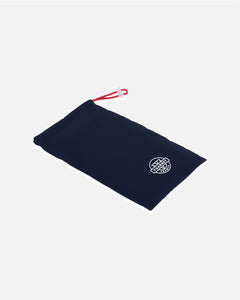
ÉTUI MARINE VUARNET – LUNETTES
68,00 zł
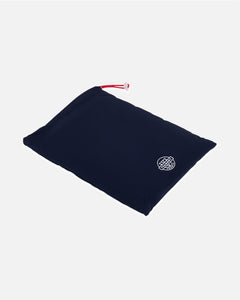
ÉTUI MARINE VUARNET – MASQUE DE SKI
90,00 zł
Tote bag
Tote bag
45,00 zł

Itcn Imagej — Plugin

ITCN remains the best first-line tool for standard DAPI/Hoechst-stained monolayers or sections with round/oval nuclei. If ITCN fails after 15 minutes of parameter tuning, then invest time in deep-learning tools. 8. Conclusion The ITCN ImageJ plugin exemplifies the philosophy of “simple but not simplistic.” Its Laplacian-of-Gaussian detector elegantly solves the clustered-nuclei problem that basic thresholding cannot. For the majority of cell counting assays—where nuclei are roughly round, stain uniformly, and SNR is reasonable—ITCN delivers 95% of the accuracy of deep learning at 1% of the computational cost and zero training overhead.

Abstract Quantifying cell numbers from microscopy images is a cornerstone of biological assays, yet manual counting remains tedious and biased. The ITCN (Image-based Tool for Counting Nuclei) plugin for ImageJ/Fiji offers an automated, tunable, and accessible solution. This article provides a technical deep dive into its algorithm, practical workflow, performance benchmarks, and limitations relative to modern deep-learning alternatives. 1. Introduction For decades, biologists have faced a fundamental bottleneck: converting visual information into discrete numerical data. Whether quantifying viral infectivity, assessing neurogenesis, or measuring tumor infiltration, counting DAPI-, Hoechst-, or Nissl-stained nuclei is essential.

// Simple macro for batch counting dir = getDirectory("Choose Source Directory"); list = getFileList(dir); for (i=0; i<list.length; i++) open(dir+list[i]); run("ITCN", "width=15 min=10 threshold=20"); saveAs("Results", dir+list[i]+"_counts.csv"); close();

Sélectionner votre langue

load me