
Advanced spell checking
Expert proofreading
Accurate translation
Instant in-place ChatGPT answers

Works with these apps and many others








GPT Tools lets you spellcheck text inside any program that doesn't support spellchecking. With the power of GPT Tools, you can spellcheck any of the 76 languages supported by ChatGPT.

Write text as well as you can, and then the tool will elevate it to the fluency of a native speaker. Utilize the mighty potential of ChatGPT, which has currently mastered an impressive 76 languages.
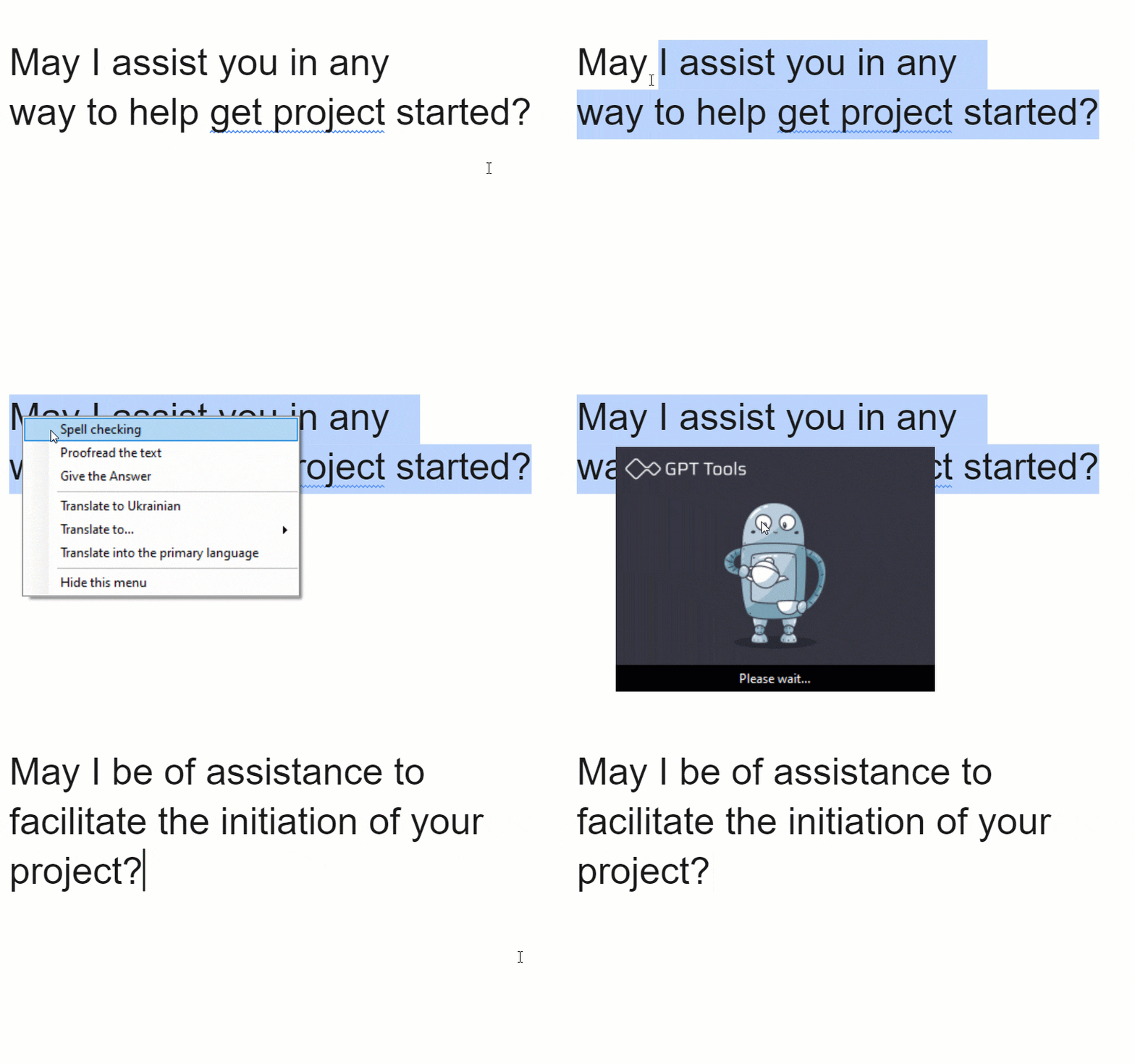
Your text gets translated in a few seconds right where you wrote it, for example, in a chat or a document.

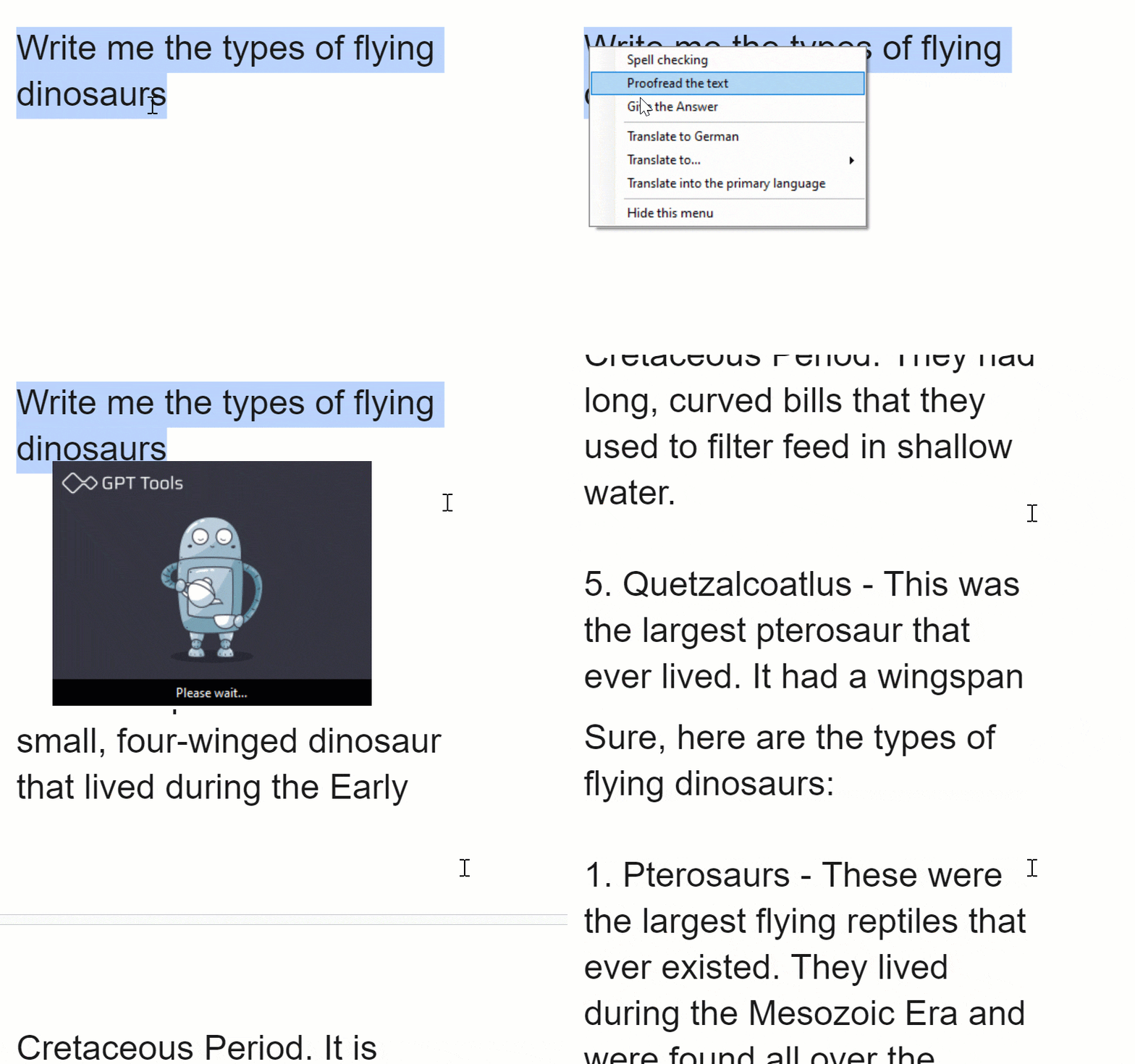
Just type your question anywhere, and GPT Tools will replace your question with the answer from ChatGPT.
Below is a on this topic. You can use this as a template or reference. Title: The Fragmented Sister: Dee’s Rejection of Heritage in Alice Walker’s “Everyday Use” Introduction In Alice Walker’s “Everyday Use,” the character Dee (later rechristened “Wangero Leewanika Kemanjo”) serves as a complex antagonist to her mother and sister, Maggie. While Dee is often discussed as a symbol of the Black Power movement’s misdirection, her role as a “sister” is equally critical. This paper argues that Dee fails as a sister not because she leaves home, but because she attempts to possess her family’s heritage as artifacts while rejecting the living, breathing people—specifically her sister Maggie—who embody that heritage.
Here, Dee commits the ultimate sin of sisterhood: she values things over personhood . She sees Maggie not as a sibling who survived a house fire and carries the literal scars of their shared history, but as an uneducated obstacle. Dee’s new African identity ironically makes her more cruel, not less. She accuses Maggie of being “backward” for wanting to actually use the quilts—i.e., to live within the tradition, not merely display it. sister dee
From the moment Dee arrives, she prioritizes objects over relationships. She takes photographs of her mother and the house, but she does not embrace them. More tellingly, she completely dismisses Maggie’s existence. When Dee asks for the quilts stitched by Grandma Dee, she does so not to use them, but to hang them as “art.” When her mother explains that Maggie is “saving them for everyday use,” Dee responds with condescension: “Maggie can’t appreciate these quilts… She’d probably be backward enough to put them to everyday use.” Below is a on this topic
This difference culminates in the final scene. When Mama snatches the quilts from Dee and gives them to Maggie, Dee delivers a stinging rebuke: “You just don’t understand… Your heritage.” Dee has convinced herself that heritage is a museum piece, and that she—the educated, worldly sister—is its sole curator. In reality, she has abandoned her sister, who is the living heritage. While Dee is often discussed as a symbol
Dee’s request for the butter churn dasher is equally telling. She wants it as a “centerpiece for the alcove table.” When her mother notes that “Aunt Dee’s first husband whittled the dash,” Dee is excited—but only as an anthropologist, not as a niece. She has no memory of sitting with her aunt; she only wants the label. Maggie, by contrast, remembers who whittled it and how it felt to use it.